
Sleep Supplement Packaging Protection: Moisture, Oxygen, Light and Shipping Conditions
Packaging must protect the approved sleep supplement through filling, storage, shipping and consumer use. Barrier, closure, seal, headspace, serving count and distribution conditions should be selected for the actual gummy, powder, capsule, liquid or oral film.
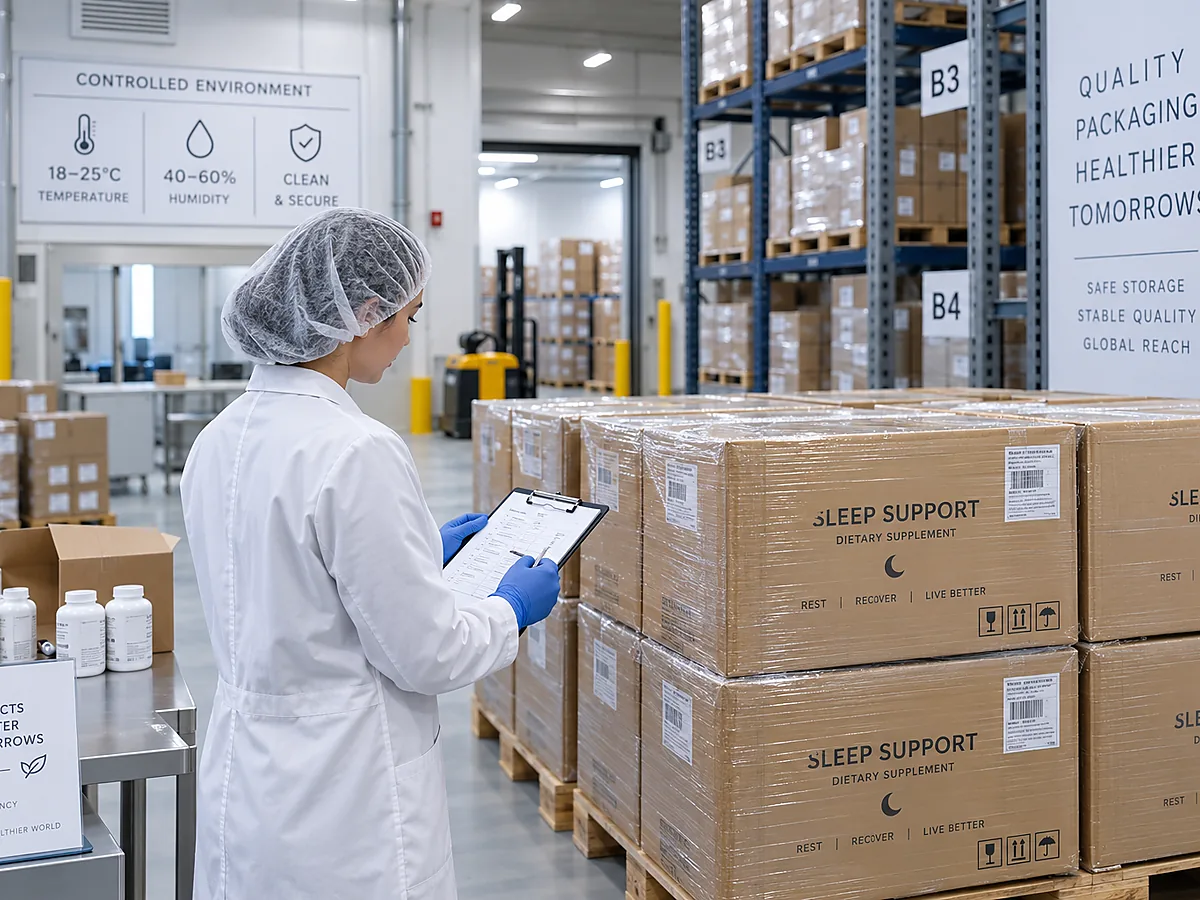
Choose packaging from product risks and filling compatibility, not appearance alone. Define what the primary package must protect against, confirm dimensions and count, and connect the package specification to stability and artwork approval.
Direct Answer for Buyers
Choose packaging from product risks and filling compatibility, not appearance alone. Define what the primary package must protect against, confirm dimensions and count, and connect the package specification to stability and artwork approval.
Define the protection problem
Moisture, oxygen, light, heat, physical damage and repeated consumer opening affect products differently. Gummies may exchange moisture and change texture; powders may clump; capsules and botanicals may be moisture-sensitive; liquids need closure and leakage control; oral films commonly need individual humidity protection.
The packaging brief should identify the product risks and intended distribution environment. “Premium bottle” or “foil pouch” describes appearance or a broad material family, not verified performance.
Separate primary and secondary packaging roles
The primary package directly contains or seals the product and provides the main barrier. A carton supports presentation, instructions and physical organization but may not replace the bottle, pouch or sachet barrier. Shippers protect grouped retail units during logistics.
Each level needs confirmed dimensions, count and artwork. A change at the primary level can affect carton size and master-case planning.
Match closure and opening behavior
Bottle closures, liners, induction seals, zipper pouches, stick seals and dropper assemblies have different functions. The selected system must suit the filling process and consumer use. Repeated opening can expose a multi-serving product even when the unopened package performs well.
Tamper-evidence, child-resistant features or other requirements depend on product and market. They should be reviewed rather than assumed from a catalogue image.
Control count, headspace and fit
The container must hold the finished units without damaging them or creating misleading presentation. Piece size, capsule count, powder density and scoop or desiccant where applicable affect internal volume. Oversized containers can increase shipping volume; undersized ones can complicate filling or product removal.
Use confirmed commercial dimensions instead of visual mockups for label panels, cartons and shipping calculations.
Link packaging to stability and change control
Stability evidence is tied to the tested formula and packaging system. Changing resin, film structure, closure, liner or dimensions can change protection. Supplier substitutions should be assessed and documented against the approved specification.
The package specification should identify materials, dimensions, components, artwork version and relevant performance requirements. Generic purchase descriptions are insufficient for controlled repeat production.
Include logistics and consumer communication
Export cartons, palletization, transit duration and climatic exposure can influence protection and landed cost. The retail package must also communicate serving, storage and opening instructions accurately. Packaging engineering and artwork approval should therefore proceed together.
Exact packaging options and commercial terms are project-specific. MITEYO Sleep can coordinate available bottle, pouch, stick, sachet, dropper and carton routes after product and market requirements are reviewed.
Buyer Decision Matrix
| Product format | Primary packaging questions | Typical risk focus |
|---|---|---|
| Gummies | Bottle or pouch, closure, count and headspace | Moisture exchange, texture and heat exposure |
| Powders | Tub, pouch or stick film, closure and scoop | Moisture, clumping, aroma and flow |
| Capsules | Bottle, closure, count and internal protection | Moisture, shell and ingredient sensitivity |
| Liquids / drops | Bottle, liner, dropper and leakage control | Seal, compatibility, light and oxidation |
| Oral films | Individual pouch and secondary dispenser | Humidity, seal integrity and handling |
Procurement and Development Checklist
- List product-specific risks.
- Define primary, secondary and shipping roles.
- Confirm filling compatibility.
- Use actual product dimensions and count.
- Specify materials, closure and seals.
- Connect package to stability plan.
- Control substitutions and artwork versions.
Related Buyer Guides and Capabilities
Frequently Asked Questions
Is a glass bottle always more protective?
No universal conclusion follows from material name alone. Product compatibility, closure, light, breakage, weight and distribution all need review.
Does adding a desiccant solve moisture problems?
Not automatically. Formula behavior, package barrier, closure, headspace and consumer use all contribute.
Can packaging be changed after stability testing?
A change should be assessed because the existing evidence may be tied to the tested packaging system.
When should artwork be finalized?
After product count, serving, component dimensions and required label information are sufficiently confirmed.
Start Your Sleep Supplement Project
Tell us your target market, formula direction, dosage form, packaging and estimated order quantity.