
Sleep Stick Pack Development: Formula Weight, Film Structure and Filling Compatibility
A sleep stick pack must be developed as a connected powder-and-package system. Formula weight, bulk density, flow, stick dimensions, film barrier, sealing area, carton count and consumer opening experience all affect feasibility.
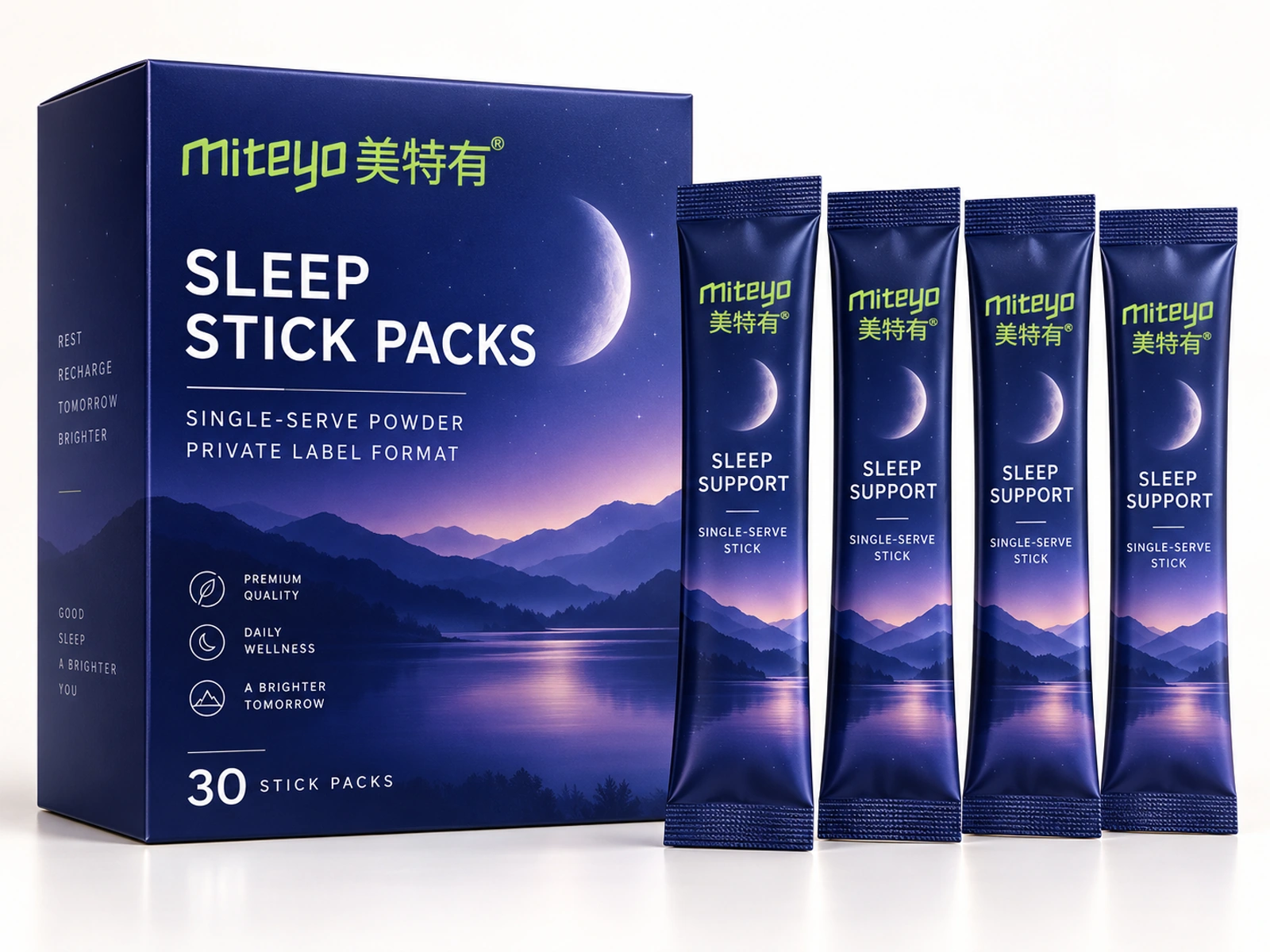
Do not select stick dimensions from gram weight alone. The manufacturer needs the formula bulk density and flow behavior, while the packaging specification must provide enough volume, barrier and sealing performance for the intended powder.
Direct Answer for Buyers
Do not select stick dimensions from gram weight alone. The manufacturer needs the formula bulk density and flow behavior, while the packaging specification must provide enough volume, barrier and sealing performance for the intended powder.
Start with the finished formula
An estimated serving weight is only the beginning. Powders with the same weight can occupy very different volumes because of bulk density and particle structure. A stick selected before the formula is defined may be too small to fill consistently or unnecessarily large for the final blend.
The project should identify the formula revision, target serving weight, flavor, preparation method and physical powder characteristics before final package dimensions are approved.
Review flow and dosing behavior
Narrow stick machines require the blend to feed and dose consistently. Fine, cohesive, electrostatic or moisture-sensitive powders may create variation or residue. Ingredient grade, particle distribution and permitted processing aids can affect performance.
A laboratory scoop test does not reproduce commercial filling. The development plan should include the appropriate process check before the buyer locks a large printed-film order.
Select dimensions with sealing space
The stick needs usable product volume plus headspace and clean seal areas. Width and length also affect artwork readability, carton fit and opening behavior. A visually slim pack may conflict with powder volume or reliable seals.
The buyer should request dimensions based on the reviewed formula and machine capability. Changes to serving weight or bulk density can require packaging revision.
Specify barrier and film construction
Moisture, oxygen and light sensitivity differ by formula. Film construction should be selected around the product protection requirement, printing method, sealing process and distribution conditions. Describing a package only as “foil” is not a complete specification.
The approved packaging record should identify the material structure, dimensions, artwork version and relevant performance requirements. Supplier substitutions should follow change control.
Coordinate sticks, cartons and shipping cases
The number of sticks per carton affects carton dimensions, consumer use period, filling and packing work and shipping efficiency. Carton artwork must match the stick count, net content and serving information. Master-case planning should use confirmed finished dimensions rather than early mockups.
A complete quotation needs the stick formula and film, carton configuration, quantity, testing and logistics assumptions. Comparing only powder price misses a large part of the system.
Approve formula and package together
Final approval should connect the powder specification, stick dimensions, film structure, seal and artwork. A change to flavor, serving weight or ingredient grade may affect flow or volume and should trigger review.
MITEYO Sleep can coordinate formula, sample, stick and carton development. Exact dimensions and commercial terms remain project-specific until the powder and packaging system is defined.
Buyer Decision Matrix
| System element | Decision required | Dependency |
|---|---|---|
| Formula | Serving weight, density, flow and moisture sensitivity | Determines volume and filling behavior |
| Stick dimensions | Width, length, headspace and seal area | Depends on formula and machine |
| Film | Barrier, printing and sealing structure | Depends on protection and equipment |
| Carton | Sticks per carton and presentation | Depends on finished stick dimensions |
| Shipping case | Case count and dimensions | Depends on confirmed retail pack |
Procurement and Development Checklist
- Confirm final formula revision.
- Measure serving weight and bulk-density implications.
- Evaluate flow for the intended filler.
- Select dimensions with sufficient seal area.
- Define film construction and barrier.
- Approve stick and carton artwork together.
- Verify count and logistics dimensions.
Related Buyer Guides and Capabilities
Frequently Asked Questions
Can stick size be selected from an eight-gram target alone?
No. The same weight can occupy different volumes, so bulk density, flow, headspace and machine requirements must be reviewed.
Is every aluminium-layer film the same?
No. Packaging structures differ. The approved specification should identify the selected construction and relevant performance basis.
Can printed film be ordered before filling trials?
That creates risk. Formula volume, flow, dimensions and sealing compatibility should be sufficiently confirmed before a large custom-film commitment.
What determines sticks per carton?
Consumer plan, serving count, stick dimensions, carton presentation, cost and logistics all contribute.
Start Your Sleep Supplement Project
Tell us your target market, formula direction, dosage form, packaging and estimated order quantity.