
Sleep Capsule Development: Capsule Size, Fill Weight and Ingredient Compatibility
A sleep capsule formula must fit the selected shell at a practical serving count while maintaining blend flow and uniformity. Ingredient bulk density, particle characteristics, excipients, shell choice, moisture sensitivity and bottle configuration all affect development.
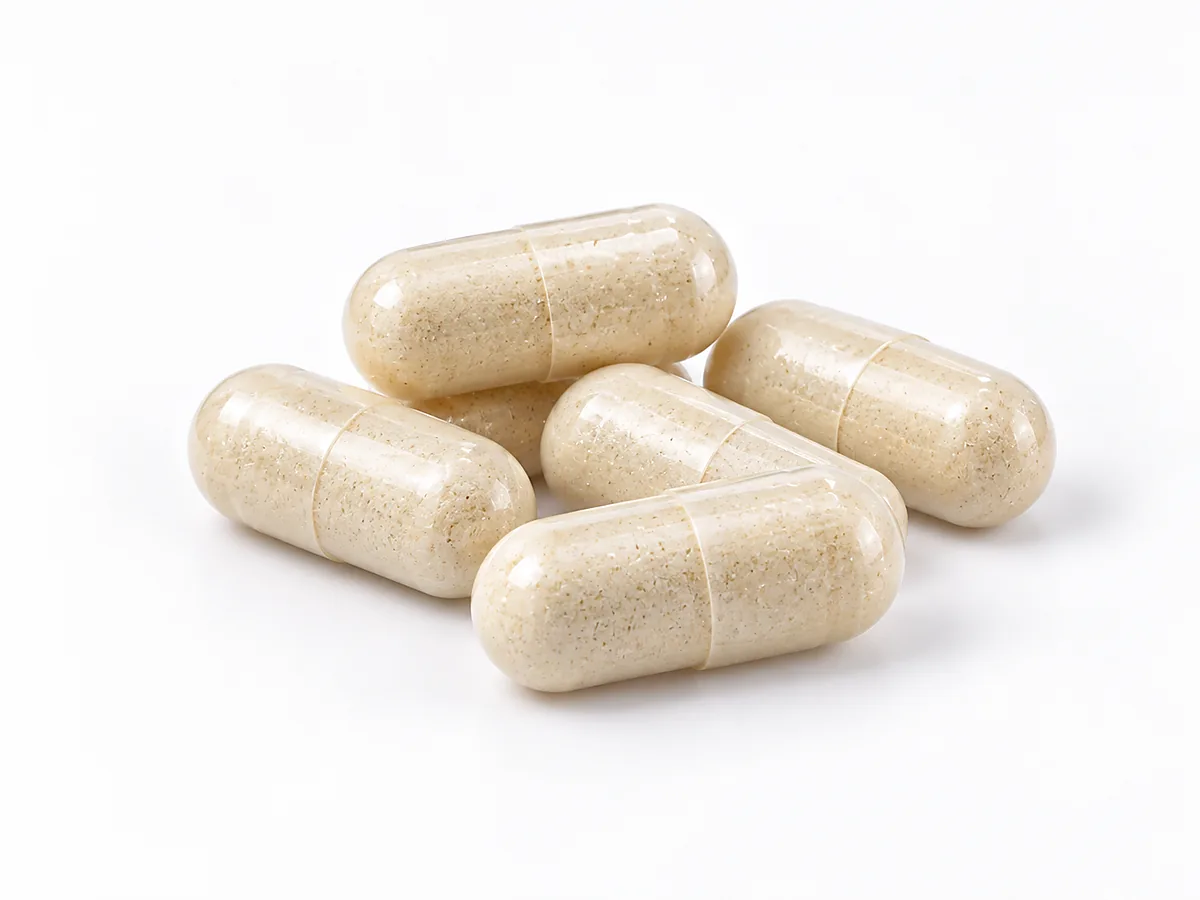
Do not estimate capsule count from ingredient names alone. Convert the actual material specifications into blend weight and volume, then review shell size, bulk density, flow, serving count and packaging before fixing the label.
Direct Answer for Buyers
Do not estimate capsule count from ingredient names alone. Convert the actual material specifications into blend weight and volume, then review shell size, bulk density, flow, serving count and packaging before fixing the label.
Calculate weight and volume separately
Capsules are volume-limited. Two materials with the same weight may occupy different shell volumes because of bulk density and particle structure. The formula team should calculate the actual raw-material weights and evaluate the blended volume rather than assuming a familiar capsule size will fit.
Elemental mineral claims and standardized extracts can require more compound weight than the front label suggests. Serving count should remain flexible until the selected materials are reviewed.
Select shell and size around the consumer
Shell material, color, opacity and capsule size contribute to product positioning and swallowing experience. Larger shells may reduce capsule count but can be less convenient for some consumers. Smaller shells may require more units per serving.
The brand should define dietary and visual requirements early while allowing the manufacturer to compare practical sizes. Final shell selection needs compatibility and supply confirmation.
Design blend flow and uniformity
Fine powders, sticky botanical extracts and materials with different particle sizes or densities can affect mixing and filling. Excipients may be needed to support flow or fill consistency, subject to formula and label review. A long active list does not remove the need for a functioning manufacturing blend.
Low-dose components require an appropriate distribution strategy. The test plan should follow the actual formula and serving rather than rely on a generic capsule statement.
Review ingredient and shell compatibility
Hygroscopic materials, oils, strong colors or reactive components may influence shell choice and packaging. The manufacturer should review material data and intended storage conditions. A dry-looking ingredient list does not guarantee a simple capsule.
Changes in supplier, extract carrier or material grade can change density and handling. Critical specifications should be controlled after approval.
Connect capsule count to bottle design
Capsules per serving, servings per container and total count determine bottle volume, label information and consumer use period. Headspace, closure and moisture-control strategy should be considered with the final capsule and count.
Comparing quotations requires the same capsule size, count, formula basis, shell, bottle and documentation scope. A per-capsule price without those assumptions is incomplete.
Approve a capsule-specific specification
Final records should identify formula revision, raw-material specifications, shell, capsule size, serving count, appearance, bottle configuration and agreed batch requirements. The approved product is the complete system, not the active list alone.
Exact capsule count and commercial terms are confirmed after blend and packaging feasibility. No universal market or claim approval is implied.
Buyer Decision Matrix
| Development item | What controls it | Buyer decision |
|---|---|---|
| Fill weight | Material weights and bulk density | Acceptable capsule size and count |
| Shell | Dietary, visual and compatibility requirements | Shell type, color and opacity |
| Blend | Particle size, density, flow and low-dose actives | Excipients and process basis |
| Serving | Formula volume and consumer convenience | Capsules per serving |
| Bottle | Total count, headspace and protection | Container and closure configuration |
Procurement and Development Checklist
- Provide exact material forms.
- Calculate compound weight and blend volume.
- Compare shell size with serving count.
- Review flow and low-dose distribution.
- Confirm shell and ingredient compatibility.
- Select bottle after capsule count is known.
- Approve formula, shell and packaging together.
Related Buyer Guides and Capabilities
Frequently Asked Questions
Why can capsule count change during development?
The selected material specifications, compound weights and bulk density determine how much blend fits in each shell.
Are vegetarian capsules always interchangeable with gelatin capsules?
No universal assumption should be made. Shell materials, formulation compatibility, supply and product requirements need review.
Can capsules avoid all stability concerns?
No. Ingredients and shells can still be sensitive to moisture, oxygen, light or interaction, so packaging and verification remain important.
Should bottle size be selected first?
Bottle direction can be explored, but the final container should follow confirmed capsule size and count.
Start Your Sleep Supplement Project
Tell us your target market, formula direction, dosage form, packaging and estimated order quantity.