
Sleep Gummies vs Capsules vs Powders: Choosing the Right Format
Compare gummies, capsules and powders by formula load, taste exposure, serving behavior, packaging and commercial complexity.
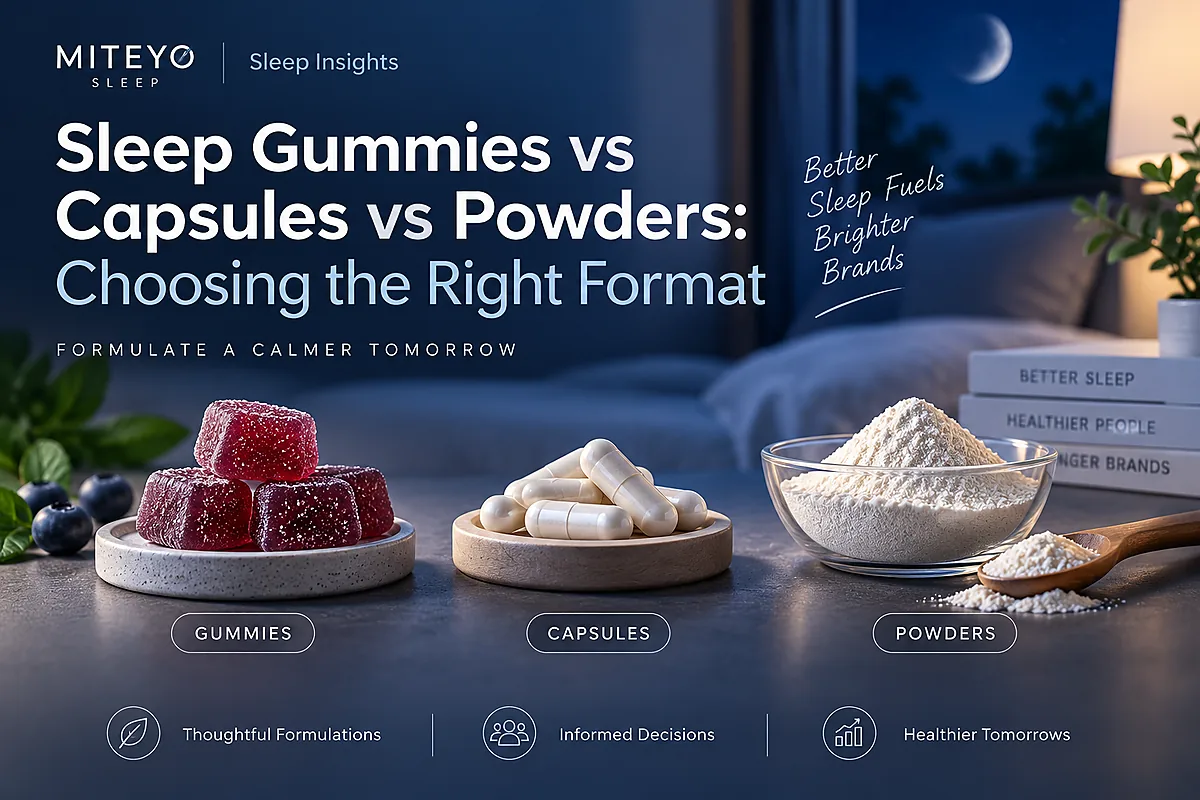
Direct Answer for Buyers
Choose the format after defining the formula and consumer routine. Gummies prioritize a flavored experience, capsules isolate taste and can handle many dry blends, while powders provide more serving mass and ritual-style positioning. None is universally superior.
Format choice is a product-system decision
A dosage form affects far more than appearance. It changes how much active material can fit, whether the consumer tastes the formula, how many units make a serving, what packaging is practical and which production controls are relevant. Selecting a trendy format before calculating the formula often forces expensive revisions later.
The useful comparison starts with a written brief: target market, consumer, ingredient architecture, serving objective, desired experience, packaging direction, channel and quantity range. Manufacturers can then identify which format carries the concept with the fewest compromises.
When gummies create value—and when they create pressure
Gummies can make a nighttime product approachable, flavorful and visually distinctive. They also require a structural base, sweetener and acid system, flavor, color direction and moisture control. Those components consume part of every piece, leaving less room for minerals, amino acids or complex botanical systems.
A successful gummy brief specifies the gelling preference, dietary positioning, approximate serving concept and sensory target. A buyer should expect prototype work around taste, texture and appearance. If active load demands too many pieces or overwhelms the sensory system, another format may deliver a better product.
When capsules simplify the formula
Capsules limit direct flavor exposure and often suit dry botanical or multi-ingredient blends. Their capacity still depends on material bulk density, flow and capsule size. A long ingredient list can produce an inconvenient capsule count even when the formula is technically fillable.
The buyer should review shell preference, capsule size, fill weight, number of capsules per serving and bottle count together. The absence of flavor work does not mean no development is required: blend uniformity, flow, disintegration and moisture sensitivity remain relevant.
When powders provide the needed serving space
Powders can accommodate larger mineral or amino-acid systems and create an evening drink ritual. The consumer experiences the entire formula directly, so solubility, dispersion, sediment, acidity, sweetness, aroma and aftertaste become central. Scoop dosing and single-serve sticks also create different filling and packaging requirements.
A powder should be assessed in the intended water volume and use conditions. A formula that tastes acceptable in a concentrated laboratory sip may perform differently in the labeled serving. The approved method should define liquid volume, mixing instructions and the sensory benchmark.
Compare the commercial system, not only unit cost
Format changes container count, shipping weight, packaging components, development work and consumer price architecture. A low piece cost can be misleading if the daily serving needs several pieces or if premium packaging is required. Quotations should use the same formula basis, serving count, pack configuration, quality scope and shipping assumptions.
Channel also matters. A compact capsule bottle, a colorful gummy jar and a carton of stick packs communicate different value propositions. The chosen format should support how the brand plans to sample, merchandise, ship and explain the product.
Use a decision gate before final artwork
Before artwork begins, the buyer and manufacturer should agree on formula feasibility, serving architecture, sample direction, packaging basis and open risks. This prevents front-label claims or unit counts from locking the team into a format that cannot carry the intended formula.
A format comparison is complete only when it identifies both advantages and compromises. The final decision should be recorded in the project brief and connected to the approved sample and specification.
Buyer Decision Matrix
| Criterion | Gummies | Capsules | Powders |
|---|---|---|---|
| Consumer experience | Flavored and chewable | Neutral swallowing format | Mixed drink and nighttime ritual |
| Formula space | More constrained by base and piece size | Limited by shell volume and bulk density | Generally more room per serving |
| Taste exposure | Full taste and texture exposure | Limited direct taste exposure | Full flavor and mouthfeel exposure |
| Key development work | Gel, flavor, moisture, appearance | Blend, flow, fill and shell | Dispersion, flavor, flow and fill weight |
| Typical packaging question | Bottle or pouch barrier and count | Bottle count and moisture control | Tub, pouch or single-serve stick system |
Procurement and Development Checklist
- Calculate the actual serving in each candidate format.
- Compare ingredient load and sensory burden.
- Review unit count, container and shipping implications.
- Prototype the leading format before final artwork.
- Document why the selected format fits the consumer and formula.
Related Buyer Guides and Capabilities
Use This Guide in Your Project Brief
Provide serving weight, mixing instructions, liquid volume and the intended jar or pouch count.
Illustrative planning prompt, not an official specification, COA or completed customer project: identify the preferred option, the unresolved technical question and the evidence needed to approve the next stage.
Evaluate a relevant product concept · Prepare sample acceptance criteria · Discuss your project
Sources and Further Reading
Use the following references within their stated scope. US requirements are relevant to US-market review and do not establish another market’s requirements or certify an individual product.
Frequently Asked Questions
Are gummies always easier to sell?
Gummies can offer strong sensory and visual appeal, but they are not automatically the best choice when the formula creates excessive load, poor taste or an inconvenient serving.
Are capsules always the simplest format?
They remove much of the flavor challenge, but blend uniformity, bulk density, capsule count, shell selection and packaging still require review.
When should a brand choose powder?
Powder is worth considering when the concept needs more material per serving or when a drink ritual supports the brand position.
Can one formula be offered in all three formats?
The ingredient direction may be related, but each format needs its own feasibility work, amounts, excipients, process and finished-product specification.
Tell Us About Your Sleep Supplement Project
Start with the essentials. Our Shenzhen sales and R&D team coordinates feasibility and commercial review with the production facility.
Inquiry privacy information
Your submitted contact and project details are stored in the website inquiry system for MITEYO team follow-up. The submitted page, product context, referrer and campaign parameters may be included to help us understand your request. This form does not automatically send a WhatsApp message. Choosing WhatsApp opens that separate service.
For questions about information you have submitted, contact emma@miteyobio.com.