
Pectin vs Gelatin Sleep Gummies for Private Label Brands
Pectin and gelatin gummies differ in texture, processing, dietary positioning and formulation behavior. The choice should follow the target consumer, active system, sensory goal and production feasibility instead of being made from a single marketing claim.
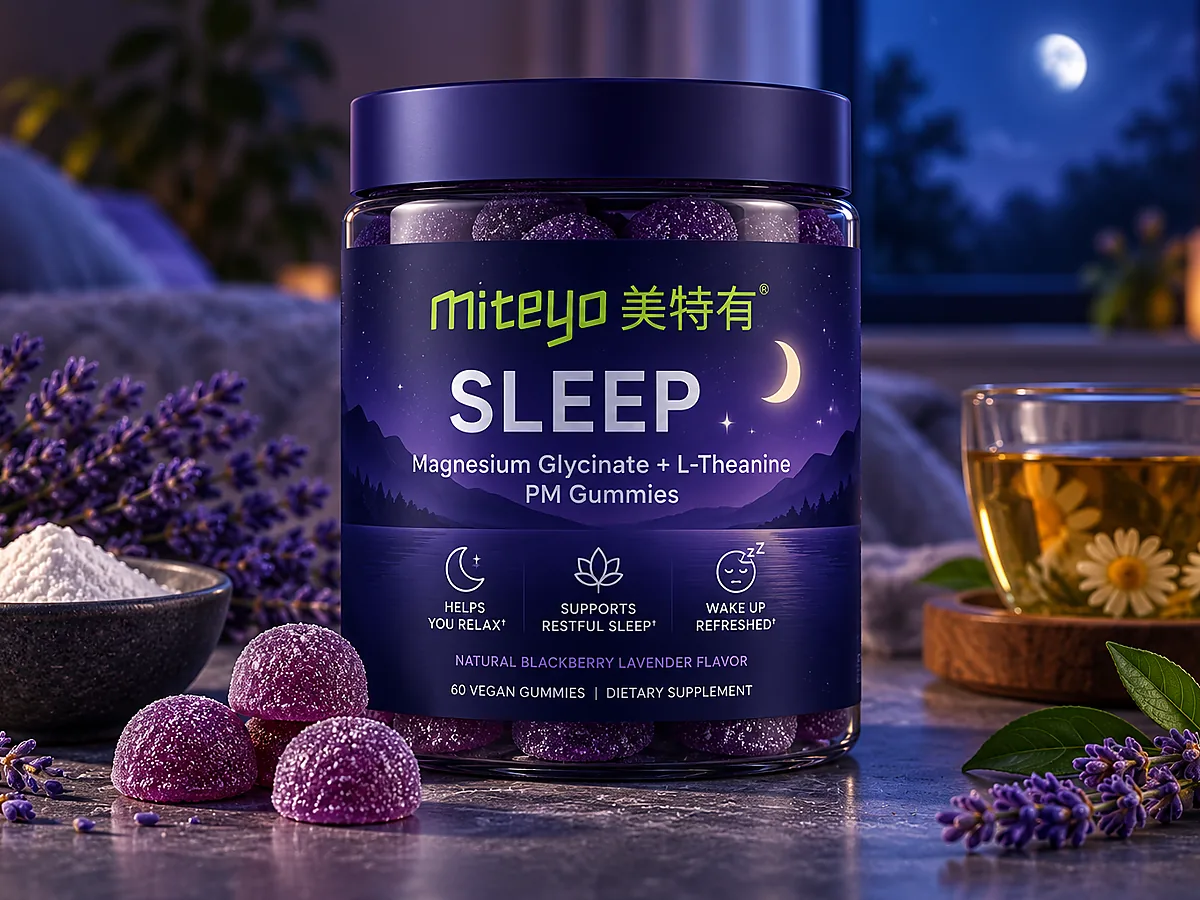
Pectin often supports plant-based positioning and a shorter bite, while gelatin commonly provides an elastic chew. Neither base automatically guarantees better stability, higher active load or lower cost; the complete formula and process determine the result.
Direct Answer for Buyers
Pectin often supports plant-based positioning and a shorter bite, while gelatin commonly provides an elastic chew. Neither base automatically guarantees better stability, higher active load or lower cost; the complete formula and process determine the result.
Choose by product brief, not assumption
The gelling system affects the product consumers actually experience. Brand positioning, dietary requirements, target texture, active ingredients, flavor and packaging should all be defined before selecting a base. A plant-based requirement may make pectin essential, while another project may prioritize a particular elastic chew.
Terms such as “premium” or “clean” do not identify a manufacturing system. Buyers should state objective requirements and allow feasibility review to determine how the base interacts with the intended formula.
Understand the texture difference
Pectin systems are often associated with a firmer, shorter bite, while gelatin systems can provide more elastic chew. The actual result depends on the complete formulation, solids, acids, moisture, process and storage. Texture should therefore be approved from a coded sample rather than inferred from the base name.
The full daily serving matters. Multiple pieces can change perceived chew, sweetness and aftertaste. Piece size and coating direction also influence the experience.
Review process and acid sensitivity
Pectin gel development depends strongly on the selected pectin system, solids and acid conditions. Gelatin follows a different thermal and setting behavior. Active ingredients that change acidity, mineral balance or solids can affect the base, which is why a previously successful platform may still need adjustment for a new sleep formula.
Manufacturers should evaluate the actual material specifications and addition sequence. A buyer should avoid assuming that switching only the gelling agent leaves the rest of the formula unchanged.
Compare active-load and sensory pressure
Neither pectin nor gelatin removes the basic mass-balance problem. Minerals and botanical extracts still occupy space and contribute taste or texture. The viable load depends on piece size, serving count, base system and sensory target.
If a proposed ingredient architecture overwhelms the gummy, changing the gelling agent may not solve it. Simplifying the formula or changing dosage form can be the more credible decision.
Align labeling and supply documentation
Dietary-position claims should match the actual formulation and supply chain. Raw-material specifications and finished-product records should identify the selected base and relevant supporting ingredients. The destination market and label wording need review before claims are fixed.
A supplier statement about one raw material does not establish the attributes of the complete finished product. Verification scope should be agreed for the commercial batch.
Use packaging and stability evidence
Both systems require moisture and temperature considerations. Package barrier, closure, count and shipping conditions should be reviewed with the formula. A texture approved in temporary sample packaging may not represent behavior in the final container over time.
Approve the gelling system, sensory reference, formula, package and test plan as connected elements. Commercial terms can then be quoted on a defined basis.
Buyer Decision Matrix
| Comparison area | Pectin direction | Gelatin direction |
|---|---|---|
| Positioning | Often selected for plant-based requirements | Animal-derived unless otherwise specified |
| Texture target | Typically firmer and shorter bite | Typically more elastic chew |
| Process focus | Pectin type, solids, acid and setting conditions | Gelatin behavior, thermal history and setting |
| Active-load reality | Still constrained by base and sensory system | Still constrained by base and sensory system |
| Approval method | Coded finished-product sample | Coded finished-product sample |
Procurement and Development Checklist
- Define dietary requirements.
- Describe the desired chew objectively.
- Provide active material specifications.
- Evaluate complete serving and aftertaste.
- Confirm coating and packaging direction.
- Approve the base through a finished-product sample.
Related Buyer Guides and Capabilities
Frequently Asked Questions
Are pectin gummies always vegan?
The complete product and supply chain must meet the intended claim; selecting pectin alone does not verify every ingredient or processing input.
Can gelatin carry more active ingredient than pectin?
There is no universal answer. Practical load depends on the complete formula, piece size, serving, process and sensory acceptance.
Can a formula switch from gelatin to pectin without new samples?
No reliable assumption should be made. The gelling systems behave differently, so the product should be reformulated and reapproved.
Which system has better shelf life?
Shelf life cannot be determined from the gelling agent alone. Formula, process, moisture, packaging and storage all matter.
Start Your Sleep Supplement Project
Tell us your target market, formula direction, dosage form, packaging and estimated order quantity.